Commercial Waste Bounds Green: Recycling and Sustainability for an Eco-Friendly Waste Disposal Area
 In the heart of north London, Commercial Waste Bounds Green is committed to creating an eco-friendly waste disposal area that supports local businesses, protects neighbourhoods and drives a measurable shift toward a sustainable rubbish area. Our approach balances practical collection services with ambitious recycling goals, clear separation practices and collaboration across the borough to ensure commercial waste becomes a resource, not refuse. This page describes our targets, partners, facilities and the low-carbon measures that make Bounds Green a greener place to operate.
We work closely with the borough's waste strategy, which promotes source separation into dry recycling, organic, and residual streams. That approach helps improve material quality and reduce contamination from mixed loads. Businesses in Bounds Green are supported with tailored collection schedules, signage for bins and training materials so that cardboard, mixed paper, glass, rigid plastics and food waste are captured efficiently at source.
 Our recycling percentage target is clear and measurable: we are working toward a 65% recycling rate for commercial waste streams in the Bounds Green area by 2030. Reaching this target relies on better segregation, improved capture of organic waste and increased reuse through recovery partnerships. Progress is tracked through regular audits and tonnage reports, and we publish updates to keep stakeholders informed about improvements in the eco-friendly waste disposal area.
Local Transfer Stations and Material Handling
Efficient processing requires nearby transfer stations and consolidation points. Commercial Waste Bounds Green operates with access to local transfer facilities that prioritise materials recovery and onward recycling. These transfer stations receive segregated loads — dry recyclables, food and green waste, and residuals — and route materials to appropriate recycling or energy recovery streams. To make this tangible, local arrangements include consistent drop-off windows, compacting services for cardboard and baling for mixed paper to reduce transport miles and improve carbon efficiency.
 We also coordinate with regional partners to make the most of municipal and privately run transfer sites. Key operational features include:
- Consolidation hubs to minimise vehicle movements
- On-site sorting and preliminary segregation to reduce contamination
- Direct links to material processors and recycling facilities
Part of our strategy is the promotion of a circular economy for businesses in Bounds Green. That means prioritising reuse and repair before recycling. Furniture, textiles and electrical items that still have life are diverted from residual waste and channelled toward charities and social enterprises for refurbishment and redistribution.
Partnerships, Charities and Reuse Initiatives
We maintain strong partnerships with local and regional charities to maximise reuse. These collaborations are designed to handle commercial streams that are suitable for rehoming: surplus office furniture, working IT equipment, gently used textiles and bulkable food donations where safe and legal. By linking businesses to vetted charities and reuse centres we extend product life cycles and reduce pressure on the Residual stream.
 Commercial Waste Bounds Green places emphasis on transparent, responsible redistribution. Charity partnerships are structured so that collections are scheduled alongside regular waste rounds where possible, minimising extra van trips. Where items cannot be reused, materials are prepared for recycling — for example, wooden pallets are repaired or chipped for biomass rather than being landfilled.
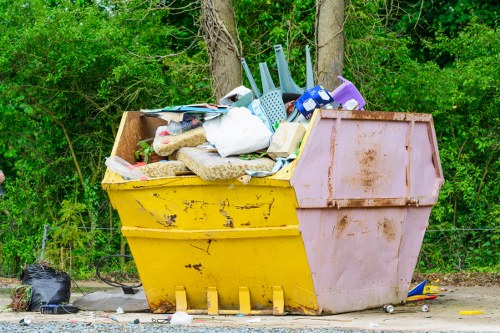 Our vehicle fleet is central to delivering a low-carbon collection service. We operate a mix of electric vans for inner-ward collections and low-emission Euro 6 vehicles for heavier loads and longer runs. This combination reduces tailpipe emissions and noise in the community. Fleet routing software and consolidation practices further cut miles, supporting the borough's wider goal of reducing transport-related emissions in the commercial waste sector.
Monitoring and continuous improvement are embedded in the program. We conduct periodic waste audits, measure contamination rates and review the effectiveness of signage and separation at source. Findings guide targeted interventions — whether additional food waste bins, adjustments to collection frequency or new reuse partner agreements. The aim is measurable progress toward the 65% recycling target while maintaining high service reliability for businesses.
To support local compliance with the borough’s waste separation guidance, we provide clear sorting matrices for common commercial streams and encourage the adoption of internal segregation points. Bins for paper and cardboard, commingled cans and plastics, glass and dedicated food waste containers help businesses meet regulatory expectations and make the commercial waste system more efficient and sustainable for everyone.
By combining a pragmatic local infrastructure of transfer stations, strong charity partnerships, active reuse initiatives and a low-carbon van fleet, Commercial Waste Bounds Green is building a resilient, eco-friendly waste disposal area. Our focus is on practical action, regular performance measurement and continuing investment to turn the commercial rubbish area into a model of sustainable urban waste management that benefits businesses, residents and the environment.
